
Finding People in New Bern
For New Bern, begin with the fact that is most likely to separate one person from another. A full name plus a former street, middle initial, relative, business, or rough date is far safer than a surname alone. New Bern records are divided by the act they document. Craven GIS ties owner names to parcels. The Register of Deeds indexes land instruments and some vital events. The statewide court portal finds parties and cases, while the clerk keeps the official file. Library directories and archives extend the trail beyond current online systems.
A short New Bern search plan keeps similar names from being merged. Record each spelling, date range, portal, and result. If an online search is blank, try initials, prior surnames, firm names, and the older index mode. A blank result may mean the event happened outside Craven County, sits in an offline volume, or is protected by law. It does not prove the person or event never existed.
- Search Craven GIS by owner name or street when land or an old New Bern address is known.
- Carry the parcel ID or deed book and page into the Register index.
- Check the court portal by party name, then verify the match with the clerk’s file.
- Use vital indexes, estate files, obituaries, and city directories for family links.
- Ask the specific custodian about terminals, paper volumes, or a narrow records request.
Official New Bern sources and commercial compilations serve different roles. The distinction matters when a name is common or an address has changed.
| Source Type | Best Use | Main Limit |
|---|---|---|
| Official record | Filed dates, party roles, parcel and case references | Records are split among custodians |
| Commercial compilation | Possible leads across many databases | May merge names or retain stale data |
| Library or archive | Earlier residents, kinship, and address history | Some items require staff help or onsite use |
New Bern Records Geography
New Bern’s role as the Craven County seat makes its records geography unusually compact. The Register of Deeds and county GIS are based at 226 Pollock Street. The Craven County Courthouse is at 302 Broad Street. The Kellenberger Room is nearby at the New Bern-Craven County Public Library. A searcher can move from a parcel reference to a deed, a case file, or a local-history source without mistaking the city for the keeper of every county record.
New Bern jurisdiction still needs care. A postal address labeled New Bern may fall outside city limits, within the city’s extraterritorial jurisdiction, or in unincorporated Craven County. City permits can cover New Bern and its extraterritorial area, while county services cover other land. Annexation records can show when land entered the city and can point to a minute book, page, acreage, and annexation name. Those facts identify the right public desk; they do not prove who lived at the site.
Note: A New Bern mailing label is delivery geography, not proof that the parcel lies within the municipal boundary.
New Bern People Search Offices
The right custodian depends on the event. The Register of Deeds holds deeds, liens, plats, assumed names, marriage files, and Craven birth and death records. GIS connects present assessment names to parcel facts and deed references. The Clerk of Superior Court holds civil, criminal, traffic, divorce, estate, and special-proceeding files. City records can identify officials, permit applicants, vendors, speakers, and owners named in New Bern public business. Detailed access and request rules belong with the New Bern public records system.
Craven County Register of Deeds
226 Pollock Street
New Bern, NC 28560
252-636-6617
New Bern office copies matter. The Register warns that its website is a locator and the office record controls. GIS is designed for assessment, not a survey or title opinion. Court search results are also a discovery layer. When a decision rests on the exact document, use the book and page, case number, or parcel ID to obtain the official file.
New Bern Property Name Search
For New Bern, Craven GIS is one of the fastest ways to turn a name or address into a record trail. Owner search separates last name from an optional first name. Address search treats Street Name as the required field, while a house number is optional. The county’s partial-match rules can help with an uncertain old address, but they can also return broad results. Compare the parcel ID, deed reference, sale date, land use, acreage, and mapped place before deciding that a result belongs to the right person.
| GIS Field | Input | Search Use |
|---|---|---|
| Owner Last Name | Text | Primary person search |
| Owner First Name | Optional text | Narrows a common surname |
| Street Name | Required text | Uses a prefix match |
| Property Number | Optional text | Uses substring behavior |
| Parcel ID | Three parts | Township, map number, and lot number |
| Deed Book and Page | Text pair | Bridges to the recorded instrument |
The Craven County GIS Property Viewer shows the owner, property-address, parcel, and map controls used for a New Bern record search.
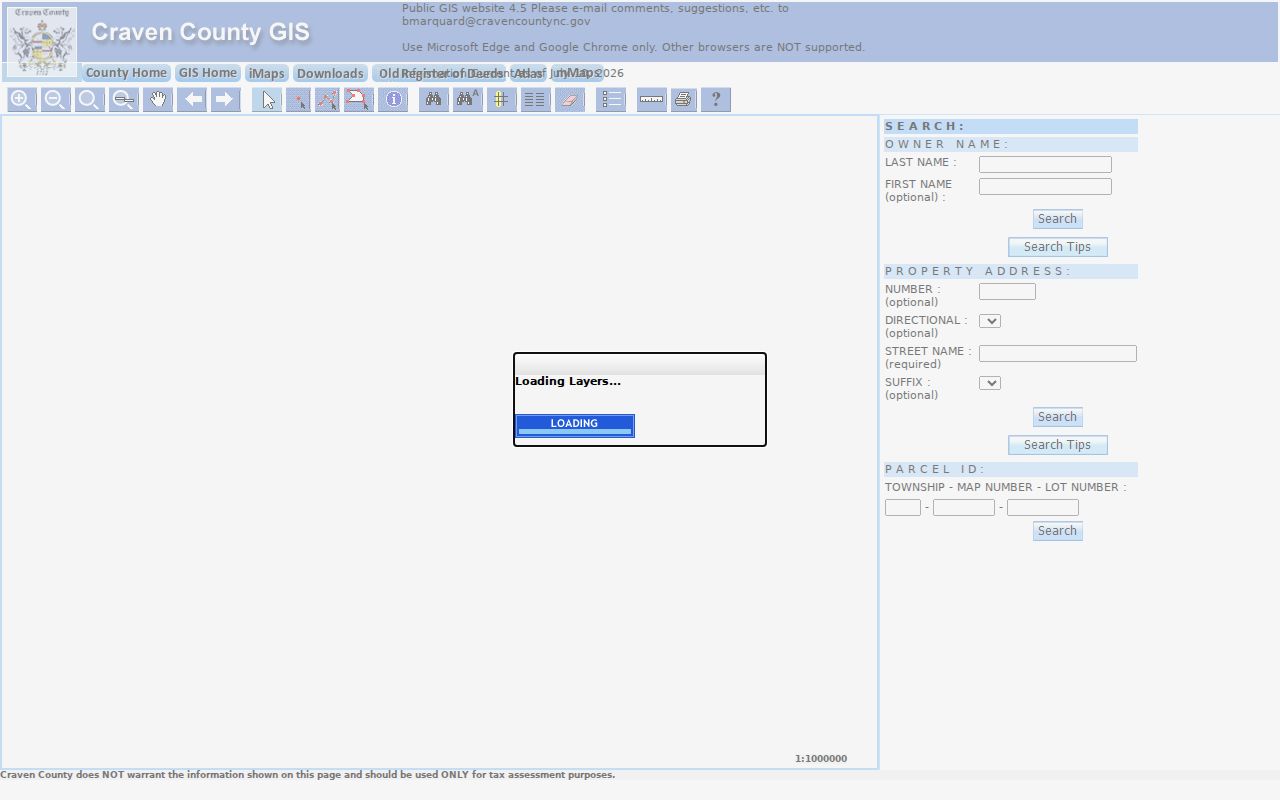
The screen makes the parcel number and deed reference useful handoff points. Verify land ownership in the deed itself, and do not treat an owner label as proof of current occupancy.
Note: The map can narrow a search, but only the recorded deed and legal description control the land conveyed.
New Bern Deed Search Chain
A parcel result becomes more useful when carried into the Craven Register’s index. Search a person in both party roles. A grantor transfers an interest, while a grantee receives one. The portal offers Consolidated Index, Vital Index, Old Index Books, and image access. Its consolidated search can use surname or firm name, first name, dates, book and page, document number, document type, PIN, and other advanced criteria. A CAPTCHA can block a smooth session, so keep the office counter in the fallback plan.
For a New Bern address, start with the GIS book and page. To follow earlier owners, open the acquisition deed and take the grantor’s name into the prior search. Work back one filed transfer at a time. Old Index Books have a verified online boundary beginning January 12, 1895. Earlier land material requires the Register, the State Archives, or microfilm. Ownership and occupancy are different questions, so compare the deed chain with New Bern city directories when the goal is to identify a resident.
- Index
- A finding aid that points to the filed record, not the controlling record itself.
- Grantor
- The party transferring an interest in a recorded instrument.
- Grantee
- The party receiving an interest in a recorded instrument.
- Book and page
- The reference used to retrieve a recorded deed or other instrument.
- Situs address
- The physical location assigned to the parcel, which may differ from a tax mailing address.
New Bern Court Name Search
New Bern District and Superior Court matters are searched through the statewide eCourts Portal for Craven County. Craven went live on eCourts in February 2025. Anonymous public users can use Smart Search with a case number or party or business name. Wildcards help when spelling is uncertain. Hearing search can also use a party, attorney, judicial officer, or courtroom. Narrow the location to Craven County and compare file numbers, roles, dates, and case categories before treating a name hit as the correct person.
The North Carolina eCourts Portal is free for public discovery, but the Craven clerk remains custodian of the official case file. Public terminals can search criminal cases by defendant, case number, or victim or witness name. Civil, estate, and special-proceeding information is also available at clerk terminals. Paper files and copies come from the county where the matter was filed.
| Record Desk | New Bern Search Scope | Access Path |
|---|---|---|
| Craven District Court | Traffic, misdemeanors, small claims, and many civil matters | Portal, terminal, and clerk file |
| Craven Superior Court | Felony, larger civil, estate, and special proceedings | Portal, calendars, terminal, and clerk file |
| Eastern District of North Carolina | Federal cases tied to the New Bern division | PACER and federal clerk |
Juvenile and adoption records are confidential. Sealed and expunged matters are not ordinary public dockets. A public case heading can also coexist with confidential papers. Read a docket as a locator, not as proof of identity, fault, guilt, or outcome.
New Bern Vital Records Search
For New Bern events, the Craven Register issues certified birth, death, and marriage records. Divorce judgments remain with the Clerk of Superior Court, while North Carolina Vital Records can issue a divorce certificate. County orders may be made online, at the counter, or by mail. The applicant provides event details, a relationship or authority, valid government photo identification, and the current fee. The county certified-copy charge reported in the research is $10, but checkout and payment rules should be confirmed before ordering.
The Craven County vital-record order instructions set out the eligible relationships and each request channel. A certified copy is restricted to the person named, a spouse, sibling, direct ancestor or descendant, a step relation listed by law, or an authorized representative with proof. An index is not the same as an unrestricted certificate.
Historical research needs a different route. North Carolina did not require statewide civil registration before 1913. Earlier family trails may run through marriage bonds, church records, family Bibles, cemeteries, newspapers, estates, and delayed births. The law does not create a simple rule that every certificate opens after a fixed number of years.
New Bern Voter Record Check
For New Bern, the NCSBE Voter Search can confirm a voter’s registration status and geography. Its form requires first name, last name, and at least one status choice. Middle initial, year of birth, and County set to Craven can separate people with similar names. A public result may show party affiliation, precinct, polling place, districts, registration status, and participation history. Participation means that a voter took part and may show the method. It never shows ballot choices.
Date of birth, Social Security and driver-license numbers, registration agency, email, and voter ID images are confidential. A public signature may be viewed but not copied or traced. Protected voters can keep an actual address confidential while their name, precinct, and other lawful fields remain public. The full lookup fields, county data request, and list-maintenance rules are covered in the New Bern voter records resource.
Note: A removed or denied voter result is an administrative status and is not evidence that the person did anything wrong.
New Bern Heir Search Trail
New Bern estate, deed, and obituary records form a practical trail for finding heirs and family connections. Start with the Craven court portal or clerk’s estate file. A file may identify the personal representative and filed notices. Then look for a deed made by the estate or heirs. That transfer can supply names and a book-page reference. An obituary or cemetery record can add kinship context, but it should be checked against the official file when names or relationships affect an estate matter.
Some searches end at a legal boundary. Adoption records are sealed, and ordinary public sources are not a lawful way around that protection. A person seeking a birth parent should use North Carolina’s adoption-record, intermediary, or reunion procedures. For a deceased New Bern resident, an obituary can point toward relatives, yet names in a notice may reflect family usage rather than a legal identity. Dates, middle names, parcel history, and court roles help confirm the match.
This human use is strongest when each source has a clear role: the estate file names the legal proceeding, the deed shows the land transfer, and the obituary supplies family context. No single source should be forced to prove all three.
New Bern Historical Directory Search
The Kellenberger Room at the New Bern-Craven County Public Library is the city’s main historical directory desk. Its sources include local and regional books, microfilm, photos, vertical files, oral histories, and online databases. The collection reaches beyond modern county lines because nearby counties were formed from Craven. James City interviews, Behind the Veil materials, and African American Voices Between Two Rivers can preserve nicknames, kinship, neighborhood, and community context missing from formal indexes.
The Kellenberger Room research collection complements digitized New Bern directories. Verified searchable volumes include 1941, 1954 and its supplement, 1958 and its supplement, and Hill’s directories for 1964, 1966, and 1967. An 1893 business and citizen directory extends the trail. A directory entry can connect a name with an address or trade, but reverse sections vary by volume. Do not assume every scan supports an address-first lookup.
An old address can be followed through the directory for its year, then compared with a census, parcel, deed, newspaper, cemetery, or estate record. A listed resident may not have owned the land. That difference is why directory evidence and property evidence work best as a pair.
New Bern Archives Name Search
When modern New Bern portals run out, Craven’s archive trail reaches into colonial courts, early estates, land, marriage, tax, and local administrative records. The county began as Archdale Precinct in 1705 and became Craven County in 1712. Boundary changes and changing court structures scattered older records across series. Before the court reform around 1868, the Court of Pleas and Quarter Sessions handled judicial, probate, and administrative work. A person can appear in minutes for an apprenticeship, license, estate, guardianship, or land acknowledgment.
The State Archives Discover Online Catalog provides the search and finding-aid entry point for these New Bern and Craven records.
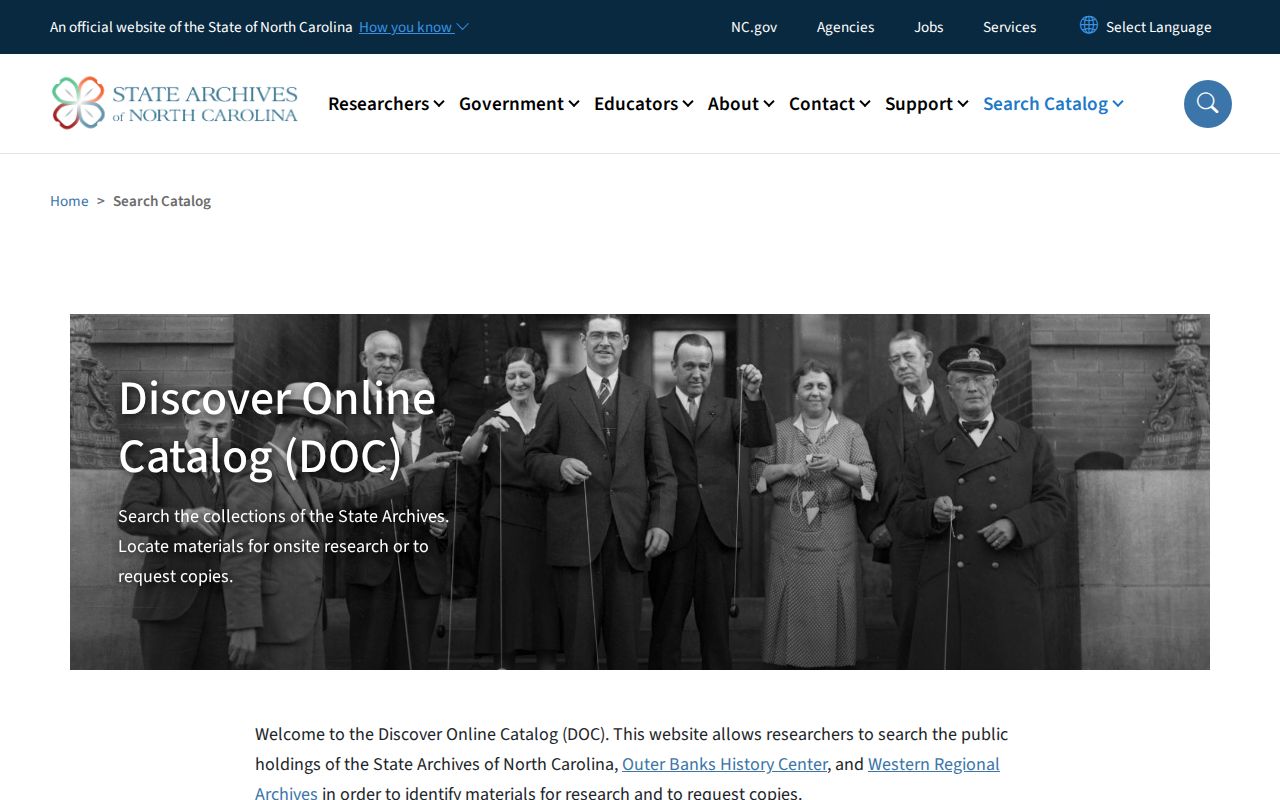
The catalog helps identify a series, but many original files still require staff help, a copy order, or onsite use. Craven miscellaneous records from 1757 through 1929 include New Bern Library shareholder accounts, auctioneer returns, bankruptcy petitions, ferry material, custody papers, dockets, and grand-jury reports. Those unconventional sources can carry names absent from standard directories.
For African American family research, the university-run People Not Property database separately indexes 1,336 Craven slave-deed records by roles that include enslaved people. The original deed remains the record to verify. Cohabitation records and oral histories can help restore relationships that ordinary grantor-grantee indexing obscures.
New Bern Correctional Record Search
Craven County’s Jail Bureau has an official information page, but no independently verified live county roster was found in the research. For a current county custody question, contact the Jail Bureau and use the court portal for charges that have been filed. State prison, probation, and parole information is a separate system maintained by the North Carolina Department of Adult Correction. It is not a complete criminal-history report and does not replace the court file.
The North Carolina Public Offender Search accepts a name or offender number for statewide correctional records.
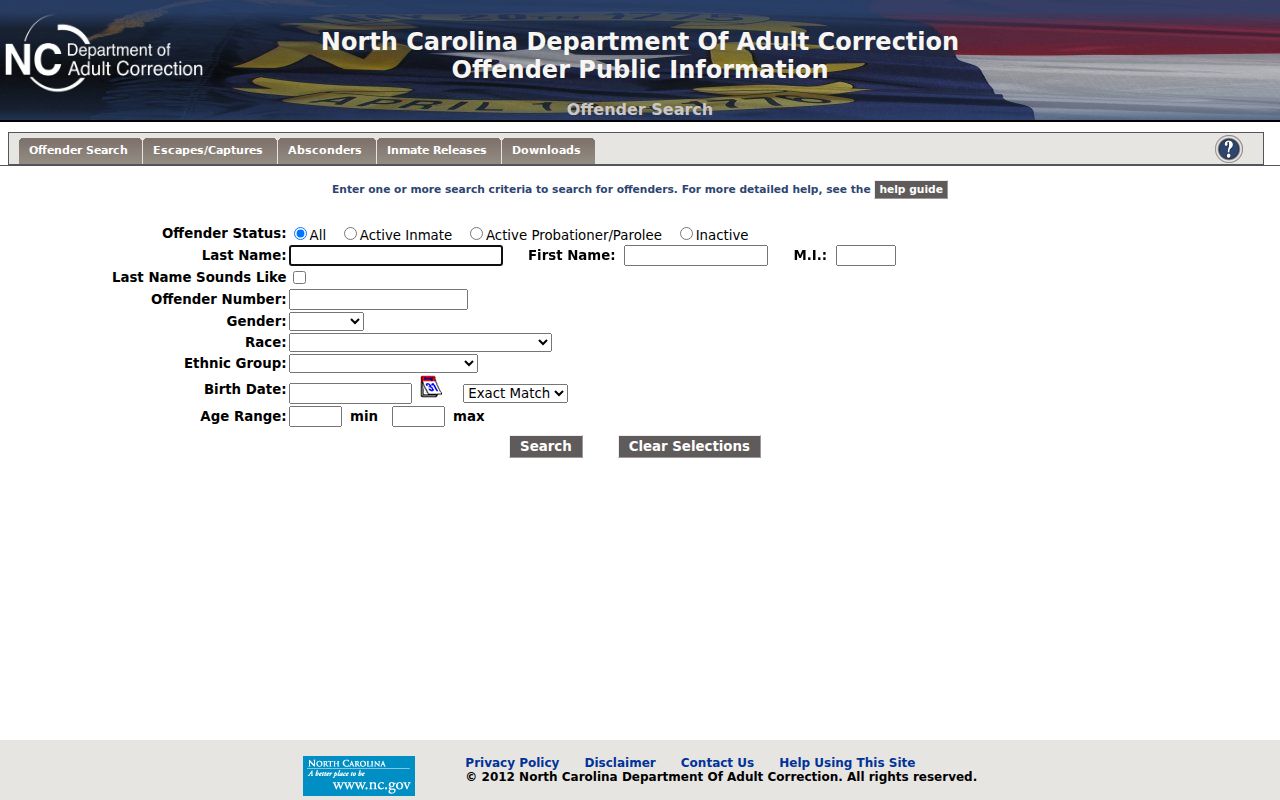
The name and number controls help narrow a New Bern result, but identity should be checked with dates and record details. County jail custody and state correctional supervision are not the same record set.
New Bern Registry Search Limits
The North Carolina Sex Offender Registry offers name, city or ZIP, address-radius, map-coordinate, and registration-number search modes. It serves a public-safety purpose. Its entry gate warns users about acceptable conduct, and state law does not turn public registry data into permission to threaten, intimidate, stalk, or harass anyone. A match should be read within the registry’s definitions and then checked carefully, especially when names are alike.
The North Carolina Sex Offender Registry displays its acceptable-use gate before the public search modes.
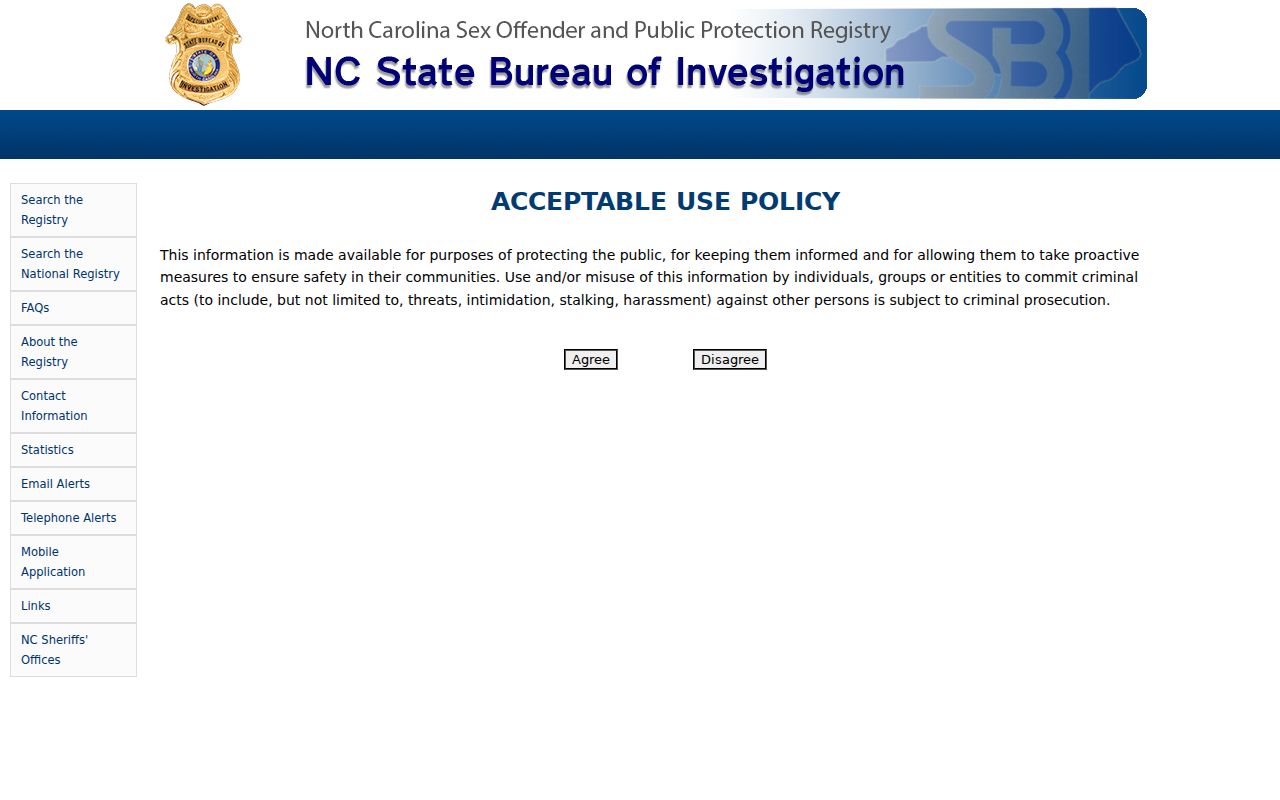
The warning is part of the search process. It separates lawful public-safety research from misuse of a name, address, map point, or record.
New Bern Privacy Record Options
North Carolina offers record-specific privacy tools rather than one broad removal right. G.S. 132-1.10 allows a person to ask a register of deeds or clerk to remove certain protected identifiers from a publicly accessible record image. The signed request must name the data, document, and exact location. It can be delivered by mail, fax, electronic transmission, or hand, and the office charges no fee for that redaction. The public record remains available after the protected number is removed.
The Address Confidentiality Program serves eligible people who have relocated because of domestic violence, sexual assault, stalking, or human trafficking. It supplies a substitute address and mail forwarding. Once election steps are completed, an eligible voter’s actual address can stay confidential even while the name, precinct, and other permitted registration facts remain public. Sealed court files, adoption material, protected addresses, and restricted certificates should never be worked around through indirect searches.
Commercial suppression is separate from an official record. A private service may remove its own display, but it cannot erase a lawful deed, court file, or tax record held by the custodian. Save each suppression confirmation and recheck name variants, while using the statutory office process for an exposed protected number.
Note: Ask for redaction of the protected identifier, not removal of the whole public instrument.
New Bern Deed Books Go Digital
Craven’s oldest deed trail may become easier to search, but the project must be described with care. A February 2026 county agenda proposal called for scanning and digitally enhancing deed books 1 through 200. The planned images were intended for searching online and in the Register’s office. The proposal matters because the portal’s verified Old Index Books begin in 1895, while earlier land records must be reached through the office, archives, or microfilm.
The Craven deed-book digitization proposal is evidence of an initiative, not proof that all work is finished. Until the Register confirms completion and coverage, searchers should still ask about the original book, index, or archived copy. New Bern’s deep record history rewards that caution. A modern search screen may be only the newest doorway into a much older file.